Between Vision & Material
There is a moment in every project when the idea becomes image. When the space that exists only in conversation, in sketches, in intention, must suddenly be seen. It is here—in this translation—that something often breaks.

Not dramatically. Quietly.
A floor that should breathe appears sealed. A wall meant to age with grace looks frozen in time. The light falls wrong. The surface reads as placeholder, not promise. And the gap between what was intended and what can now be shown begins to widen.
This is not a failure of imagination. It is a failure of available language.
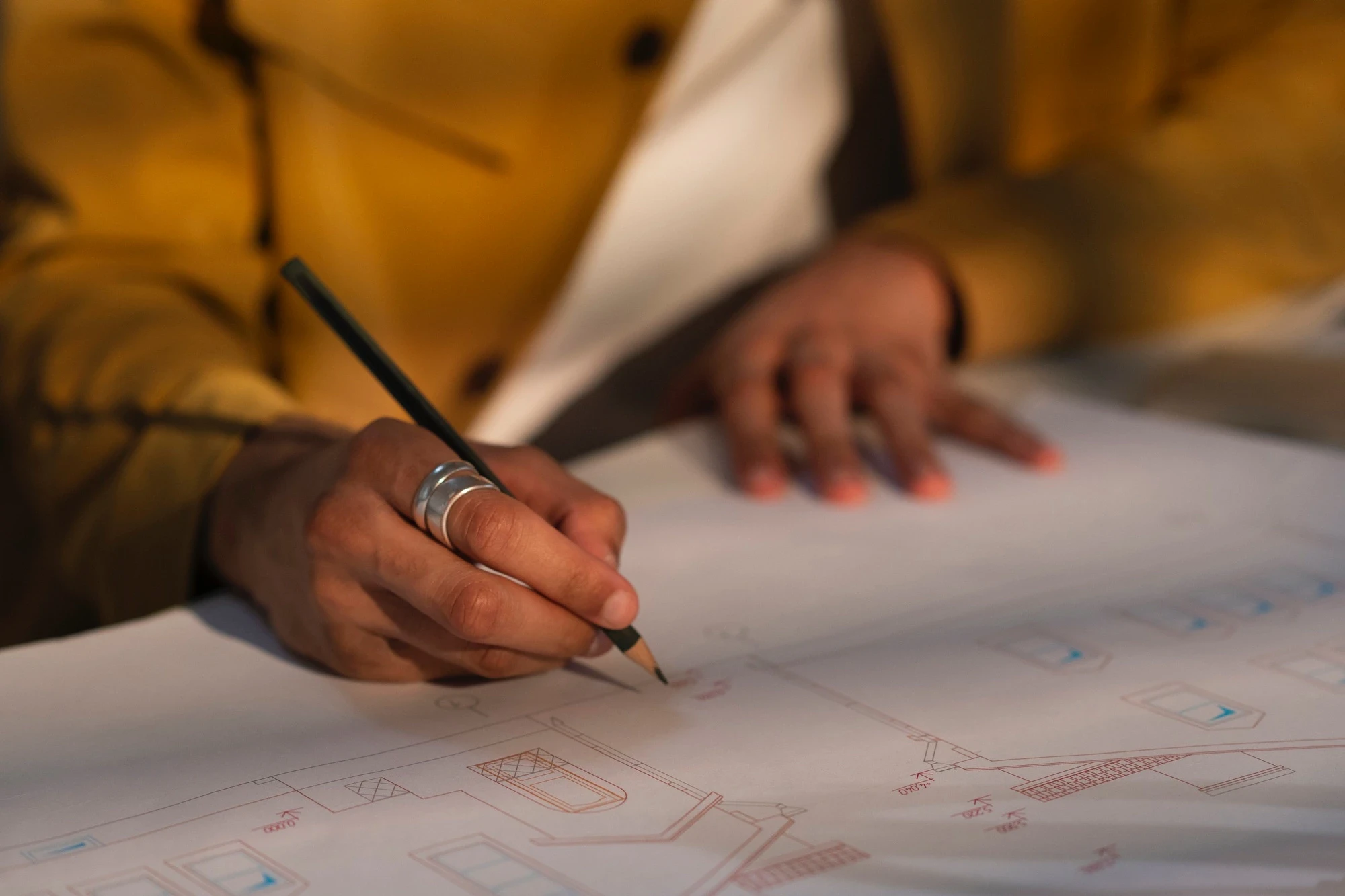
Designers today move through a landscape shaped by questions their predecessors did not need to ask. How does water pass through this surface? What does this material become in twenty years? How does it hold light at 4 p.m. in February? What does it communicate about care, about permanence, about the conditions we are willing to design into being? These are not abstract concerns. They are the material conditions of contemporary practice—woven into every brief, every conversation, every choice made under the pressure of climate, durability, responsibility, and time.
And yet.
The tools built to visualise these choices often lag behind the thinking that animates them. Digital libraries still overflow with surfaces conceived in another era: impermeable, endlessly repeating, generic in affect, divorced from the atmosphere they claim to represent. Textures that flatten rather than clarify. That offer speed but not specificity. That render the future in the visual grammar of the recent past.
This is the gap. Not between good design and bad, but between vision and availability.
Materials are not neutral.
This has always been true, but it bears repeating now, when so much depends on what we choose to show and how we choose to show it. A texture is not simply a fill. It carries weight—atmospheric, experiential, environmental. It implies a relationship to light, to touch, to aging, to impact. It shapes how a space feels before it exists, and it shapes what becomes imaginable in the first place.
Production systems have other priorities. Efficiency. Reproducibility. Scale. Constraints that make sense within their own logic but that can feel distant from the questions designers are actually trying to answer. Where one system asks how quickly can this be made, the other asks what does this space want to become. Where one optimises for repetition, the other seeks resonance.
The distance between these two perspectives is rarely acknowledged in the materials we use to bridge them.

It is worth pausing here, because frustration in design is often quiet. It does not announce itself. It builds up—in the extra hour spent looking for something that nearly works, in the compromises we feel we must make, and in the gradual loss of clarity when available choices don’t fit our goals.
This frustration is shared. It moves through studios, through collaborations, through the unspoken understanding that the gap exists and that workarounds have become part of the process.
But a workaround is not the same as a solution. And the cost of repetition— of continuing to visualise the future using tools calibrated to the past—is higher than it appears.
Because the images we make do more than represent. They normalise. They set expectations. They create the visual language that helps clients, collaborators, and the public see what’s possible and what isn’t. If every rendered floor looks the same, if every surface reads as impermeable, if every texture defaults to a kind of airbrushed timelessness, then that becomes the shared vocabulary. That becomes the horizon.

This work began as a response to this condition.
Not as an answer that resolves everything, but as a contribution—a way of bringing design-driven thinking into the layer of practice where materials are visualised and understood.
Materials developed not in isolation from context, but in conversation with it. Surfaces that attempt to hold the qualities designers are already working toward: permeability, honesty, aging, light, atmosphere, intention.
The aim is not novelty. It is clarity. Textures that support what is being designed rather than obscuring it. That make responsible choices visible rather than decorative. That allow the space to speak in the register it requires.
This is not a solution that replaces frustration with certainty. It is an acknowledgment that the frustration is real, that the gap is structural, and that the tools we rely on shape more than we tend to admit.
There is an emotional dimension to this that is easy to overlook.
Recognition matters. The moment when a designer finds a material that aligns with intention rather than fighting it. The quiet relief of not having to explain away a texture, or apologise for it, or hope that it reads differently in the final build. The feeling of being understood—not instructed, not sold to, but met where the work actually lives.
This is not about efficiency, though efficiency may follow. It is about the conditions under which good work becomes possible. About reducing the friction between thinking and making visible. About creating space for the specificity that ambitious projects demand.
The question, ultimately, is not whether textures matter. They do. The question is what kind of thinking they encode, what kind of future they help to render legible, and whether the visual language we rely on is adequate to the complexity of what we are trying to build.
Materials shape how we imagine the spaces of tomorrow. The surfaces we choose—the way they catch light, the way they age, the way they breathe or do not breathe—become part of the argument we are making about what the built environment can be.
If that language remains static while the questions evolve, the gap will only widen.
If it begins to shift—slowly, carefully, in response to the work itself—then something else becomes possible. Not a revolution. A recalibration. A quiet insistence that the tools should reflect the thinking, and that the thinking has already moved.
The world we design is also the world we visualise into being. Every render, every material study, every surface choice is a small act of imagination made visible. And imagination, over time, becomes expectation. Expectation becomes norm.